
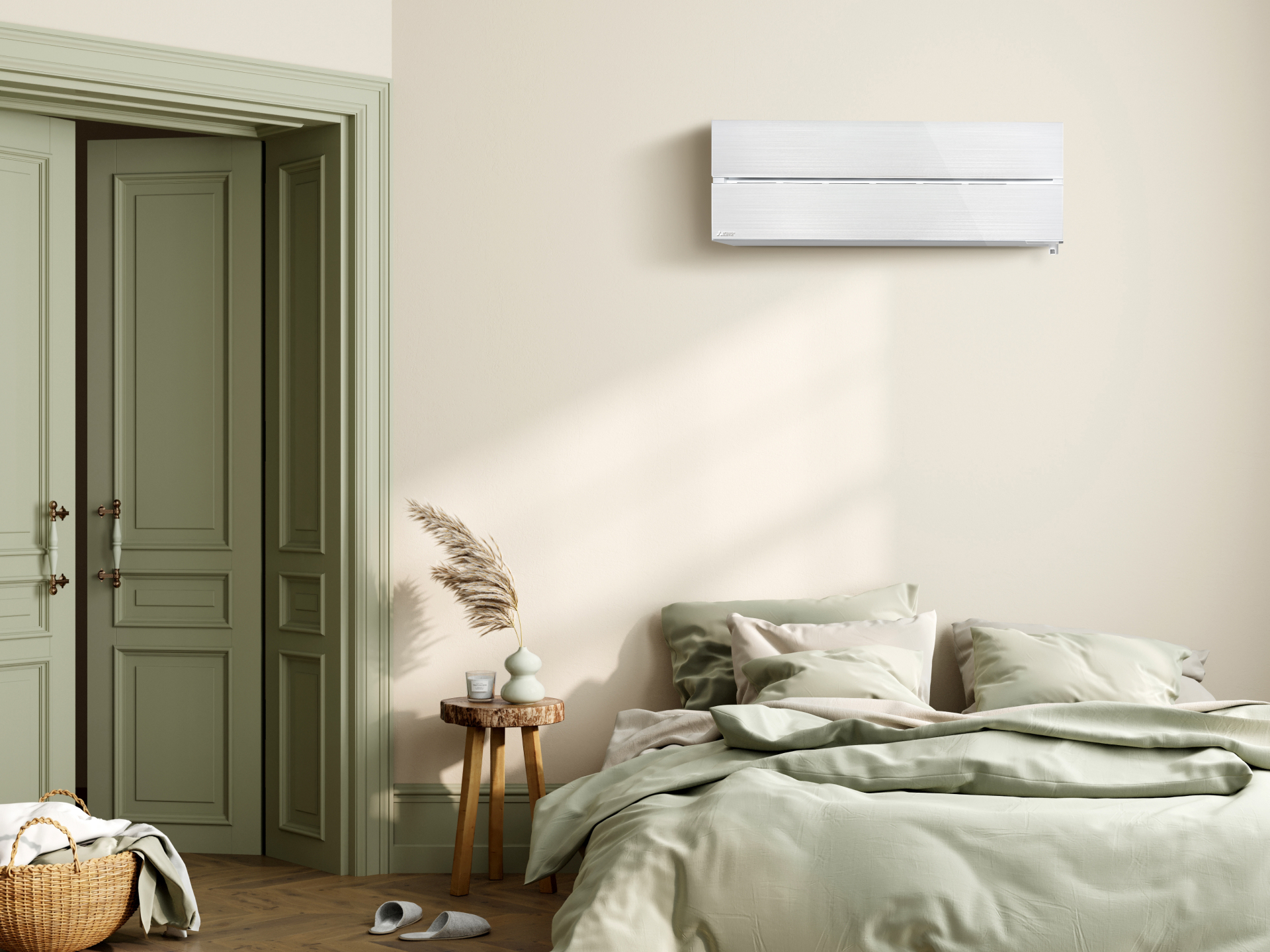
Buying a heat pump is one of those jobs where the size genuinely matters. Choose a unit that is too small and it will run flat out on the coldest Auckland mornings without ever quite warming the room. Go too big and you will pay more upfront, deal with short, noisy cycling, and lose some of the efficiency you bought the heat pump for in the first place. Winter is when most New Zealanders start shopping, so this guide breaks down exactly how heat pump sizing works — the rule of thumb, a room-by-room chart, the factors that change the answer, and what each size costs to install in 2026.
The quick answer: the heat pump sizing rule of thumb
As a rough starting point, allow roughly 0.12 kW of heating capacity for every square metre of floor area in a reasonably insulated room with a standard 2.4 m ceiling. So a 50 m² open-plan living area lands around 6 kW. It is a useful back-of-the-envelope check, but it is only a starting estimate — insulation, glazing, ceiling height and which way the room faces all push the number up or down. Treat the figures below as a guide, then confirm with a professional heat-loss assessment before you buy.
Heat pump size chart by room (NZ)
The chart below shows the capacity most Kiwi homes need for common room sizes. Capacities are quoted as heating output in kilowatts (kW).
| Room size | Typical use | Suggested capacity |
|---|---|---|
| Up to 20 m² | Bedroom, study, nursery, small room | 2.5–3.5 kW |
| 20–35 m² | Master bedroom, small lounge | 3.5–5.0 kW |
| 35–50 m² | Open-plan living/dining | 6.0–7.0 kW |
| 50–60 m²+ | Large open-plan living | 7.0–8.0 kW+ |
| Whole home | Multiple rooms / several zones | Multi-split or ducted |
Most high-wall models start at around 2.5 kW, with common sizes stepping up through 3.5, 5.0, 6.0, 7.0 and 8.0 kW. If a single room sits between two sizes, it is usually better to size up slightly for heating-led NZ winters — but only within reason (see below).
Why getting the size right matters
An undersized heat pump never reaches a comfortable temperature on the coldest days, runs constantly, and wears out faster. An oversized unit has the opposite problem: it heats the room quickly, switches off, then switches back on — a pattern called short cycling. That constant stop-start uses more power than you would expect, struggles to remove humidity in cooling mode, and puts extra strain on the compressor. The sweet spot is a unit matched to the room’s actual heat loss, so it spends most of its time running gently at part-load, which is where modern inverter heat pumps are most efficient.
Six factors that change the size you need
- Insulation: A well-insulated home holds heat far better, so it needs less capacity than an older, uninsulated villa of the same size.
- Ceiling height: Rooms with high or raked ceilings hold more air. For ceilings above 2.4 m, allow roughly 1.2 to 1.5 times the standard capacity.
- Windows and glazing: Large or single-glazed windows lose heat quickly. A room with a wall of glass needs more output than a similar room with modest windows.
- Sun and orientation: A north-facing room that catches the afternoon sun has a head start; a shaded, south-facing room needs a little more grunt.
- Room use and layout: Open-plan spaces, hallways and stairwells that open off the room effectively add to the volume the heat pump has to serve.
- Region and climate: Inland and southern parts of New Zealand get colder than coastal Auckland, which lifts the heating capacity required.
What does each size cost to install in 2026?
Price depends on the system type, your home, and how complex the installation is. A straightforward back-to-back install (indoor and outdoor units on opposite sides of the same wall) sits at the lower end; extra pipe runs, brackets or a condensate pump push it up. The figures below are indicative supply-and-install prices for 2026.
| System type | Best suited to | Indicative installed price |
|---|---|---|
| Single high-wall, 2.5–3.5 kW | Bedroom or small room | $2,500–$3,500 |
| Single high-wall, 3.5–5 kW | Medium living area (25–45 m²) | $3,200–$4,800 |
| Single high-wall, 5–7 kW+ | Large open-plan (45 m²+) | $4,500–$6,500 |
| Multi-split (2–4 indoor heads) | Several rooms, one outdoor unit | $7,500–$14,000 |
| Ducted (whole home) | Whole-home heating & cooling | $7,000–$20,000 |
These are guide prices only — the best way to get an accurate figure is a free on-site quote, because every home is different.
Single room, multi-split or ducted?
If you want to warm one main living area, a single high-wall heat pump is the most cost-effective choice. If you need several rooms heated but do not want multiple outdoor units cluttering the house, a multi-split system runs two to four indoor heads from one outdoor unit. For whole-home comfort with a tidy, almost invisible finish, a ducted system delivers heating and cooling to every room through ceiling or floor vents. Each approach has its own sizing logic, which is another reason a professional assessment pays off.
Get a professional heat-loss assessment
A rule of thumb gets you in the right ballpark, but accurate sizing follows a proper heat-loss calculation (aligned with NZS 4243) that accounts for your home’s construction, insulation, glazing and orientation. Our team can measure up, recommend the right capacity, and arrange heat pump installation that suits your home. Replacing an ageing unit that no longer keeps up? Take a look at our heat pump replacement options, and keep whatever you install running efficiently with regular maintenance and repairs.
Frequently asked questions
What size heat pump do I need for a bedroom in NZ?
Most NZ bedrooms are well served by a 2.5 kW to 3.5 kW high-wall heat pump. A small single bedroom may only need 2.5 kW, while a larger master bedroom with big windows is better matched to 3.5 kW.
What size heat pump do I need for a 40 m² living room?
A 40 m² open-plan living area typically needs around 5 to 6 kW of heating capacity. If the room has high ceilings, lots of glazing, or opens onto a hallway, lean towards the higher end or have it assessed.
Can a heat pump be too big?
Yes. An oversized heat pump short cycles — it heats the room fast, turns off, then restarts repeatedly. This uses more power than necessary, removes less humidity in summer, and shortens the life of the compressor. Bigger is not always better.
How many heat pumps do I need for a three-bedroom house?
It depends on your layout. Many three-bedroom homes use one larger unit in the main living area plus smaller units in key bedrooms, or a single multi-split or ducted system that covers the whole house. A site assessment is the most reliable way to decide.
Does a bigger heat pump cost more to run?
Generally yes. A larger unit draws more power and, if it is oversized for the room, will cycle inefficiently. A correctly sized inverter heat pump running gently at part-load is usually the cheapest to operate.
Ready to find the right size?
The surest way to get heat pump sizing right is to have an expert look at your space. The team at Air Conditioning Group has been sizing and installing heat pumps across Auckland for years — call us on 0800 224 123 or get in touch for a free quote, and we’ll recommend the perfect-sized heat pump for your home and budget.

Leave A Comment