
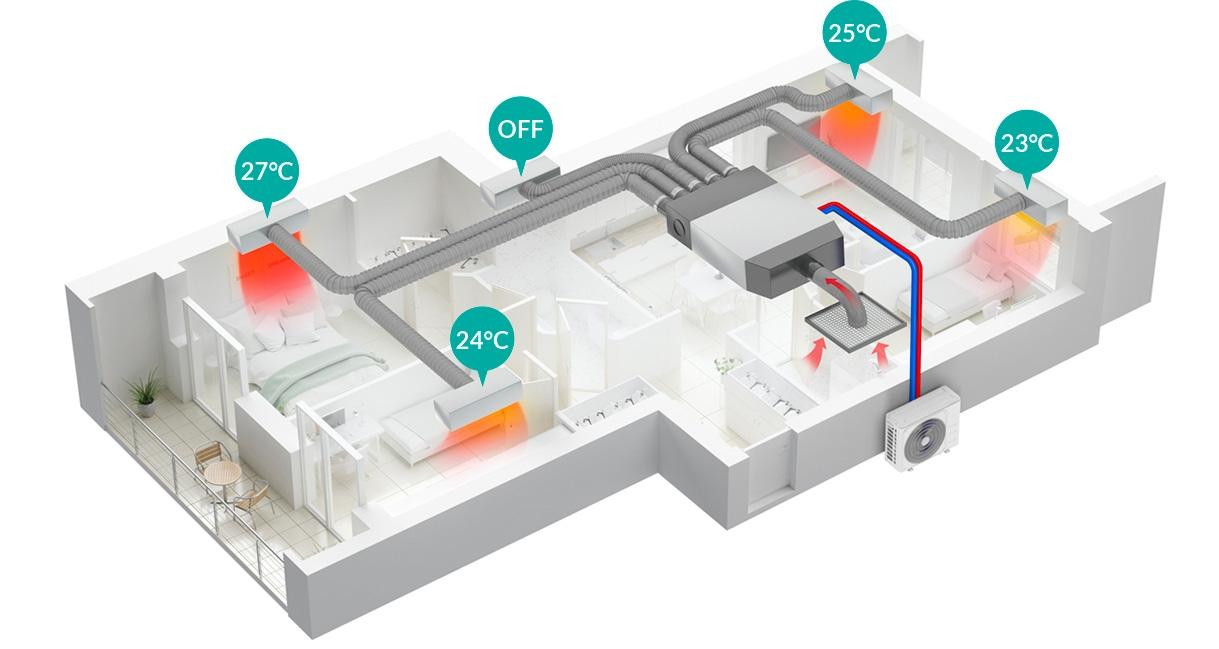
If you’ve got a ducted heat pump, you might have noticed that it tends to treat every room the same. The lounge, the spare room, and the bedroom that nobody’s used since the kids moved out all get heated at once, whether anyone’s in them or not. A ducted zone controller changes that by letting you direct heating and cooling to individual rooms instead of the whole house at once. The good news is that in most cases, it can be added to a ducted system you already have. This blog covers how it works, what it costs to add in Auckland, and how to get it set up properly.
What Zone Control Does to a Ducted System
A standard ducted system pushes conditioned air through the same set of ducts to every room, controlled by a single thermostat. Zone control adds dampers inside the ductwork, one or more per room or group of rooms, along with sensors and a central controller. Close a damper, and that zone gets little or no airflow; open it, and conditioned air flows through as normal, so each part of the house can be treated on its own terms rather than as one block.
What Happens in Each Zone
Each zone has its own damper and, depending on the system, its own temperature sensor. The controller reads each sensor, compares it against the target you’ve set for that zone, and opens or closes the relevant dampers to reach it, without affecting the other zones. A few things we look at when setting up zones in an Auckland home:
- Usage pattern over floor plan. Bedrooms used mainly at night suit one zone; living areas used through the day suit another, even if that means grouping rooms that aren’t next to each other.
- Sun and floor level. North-facing rooms and upper floors tend to run hotter and often need their own zone, separate from shaded or ground-floor rooms.
- A constant zone. The system needs somewhere for air to go even when most zones are closed, so we keep one zone, usually the main living area, open at all times to keep airflow balanced.
- Open-plan groupings. A connected kitchen and dining area can share a zone; closed-off rooms generally shouldn’t.
ZoneIQ vs AirTouch 5: Which Suits Your Home
We install two zone control systems, both controlled through a touchscreen panel and smartphone app.
ZoneIQ is built specifically for Mitsubishi Electric ducted systems, including the PEAD, PEA, and PEA Splittable ranges. It adjusts each zone in ±0.5°C increments and includes Dry Mode, which works to bring indoor humidity down towards a target you set between 40% and 70%, useful for reducing conditions that encourage mould and mildew.
AirTouch 5 works across a wider range of ducted brands, which makes it the better option if your home has mixed equipment, more than one ducted system, or you want optional Intelligent Temperature Sensors placed in individual rooms rather than relying on one central reading. It also includes energy monitoring, so you can see when the system has been running longer than it needs to.
Neither is a straightforward “better” option; it comes down to what ducted equipment you already have and how much detail you want from monitoring and humidity control. Get in touch, and we can help you confirm which suits your setup.
The Comfort and Energy Case for Zoning
Running a whole ducted system to heat one occupied room wastes energy conditioning space nobody’s using. Zoning lets each room hold its own temperature, so a home office can run warmer during the day while bedrooms stay off until closer to bedtime. Scheduling on both ZoneIQ and AirTouch 5 means this happens automatically rather than relying on someone remembering to adjust it, and AirTouch 5’s energy monitoring gives you visibility into whether your schedule matches how the home gets used.
Can You Add Zone Control to an Existing Ducted System?
In most cases, yes. Both ZoneIQ and AirTouch 5 are designed to retrofit onto ducted systems already installed, so you don’t need to replace your existing heat pump to get zoned control. The main requirement is ceiling access for fitting dampers into your existing ductwork and running sensor wiring or wireless sensors to each zone. We confirm compatibility with your specific setup during a site visit before quoting.
What Zone Control Costs in Auckland
Adding a smart zone controller like AirTouch 5 or ZoneIQ to an existing ducted system typically costs somewhere between $1,500 and $4,500 installed, covering the touchscreen controller, zone dampers, actuator motors, and wiring. Where your quote lands within that range depends mainly on how many zones you’re setting up and how accessible your ceiling cavity is. Once we’ve assessed your home, we’ll give you a fixed price for the agreed scope of work; if anything unexpected turns up once we’re in the ceiling, we’ll talk it through with you before doing anything outside that scope.
Getting the Most Out of Your Zones
A few habits make a real difference once zoning is installed:
Don’t over-zone small or rarely used spaces. A hallway or single small bedroom often doesn’t need its own zone; grouping it with an adjacent room keeps the system simpler without losing much control.
Set schedules around your actual routine, not a generic default, so bedrooms warm up before you need them rather than running all day.
Review your energy monitoring occasionally if you’re using AirTouch 5, since it will flag zones running longer than expected.
Keep your constant zone open. Closing it off along with everything else defeats the balancing it’s there for.
Set Up Room-by-Room Control in Your Home
Zone control turns a ducted system that heats or cools everything at once into one that responds to how your home is used, room by room. Get in touch with Air Conditioning Group for a free assessment and quote on adding ZoneIQ or AirTouch 5 to your ducted system.

Leave A Comment