
A ducted system is the most expensive way to heat a house and the best one, and those two facts are related. If you’re weighing up a Daikin ducted heat pump for an Auckland home, the useful question isn’t whether Daikin makes good equipment — they do — but whether ducted is the right answer for your house at all.
We install Daikin, Mitsubishi and Panasonic across Auckland, ducted and otherwise, so here’s the honest version.
What a ducted system actually does
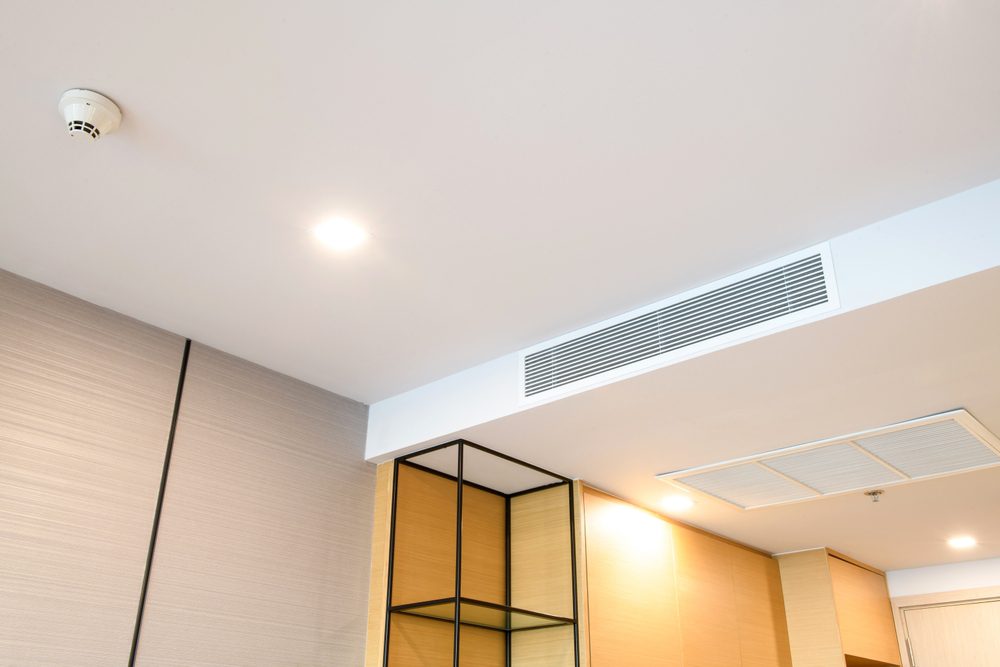
One outdoor unit feeds an indoor fan coil, usually sitting in the roof space. Insulated ducts run from it to grilles in each room’s ceiling. From inside the house you see nothing but the grilles and a wall controller.
That gets you three things a high wall can’t: even temperature across the whole house rather than one hot room and a cold hallway, no equipment on your walls, and quiet operation because the noisy part is above the ceiling.
What it doesn’t get you is cheaper running costs than a high wall. Which brings us to the bit most articles get wrong.
The efficiency question, answered honestly
You will read that ducted systems are more efficient than wall-mounted splits. They generally aren’t.
Every metre of duct running through an Auckland roof space loses some heat, and a roof void in July is cold. A well-installed, well-insulated duct run keeps those losses modest, but they’re never zero. A high wall unit blowing directly into the room it’s heating has no such losses. On delivered efficiency, the high wall usually wins.
Ducted still makes sense, for different reasons:
- You heat the whole house, not one room. Most people with a single high wall heat the lounge and let the bedrooms go cold. Ducted heats everything, which uses more energy in total but gives you a warmer, drier house — and that’s what actually prevents mould and condensation.
- Zoning cuts the waste back. Shutting off zones you’re not using recovers a lot of what the ducts lose.
- It runs steadier. Inverter systems are most efficient holding a temperature rather than fighting back from cold. A ducted system on a schedule spends more time in its efficient band.
If your priority is the lowest possible power bill for one room, buy a good high wall. If it’s a comfortable house throughout, ducted is worth the money — just don’t buy it on a false promise about efficiency.
Zoning is the real reason to go ducted
Zoning is what separates a ducted system that works from one that annoys you. Motorised dampers in the ductwork open and close to direct air where it’s wanted, so bedrooms can be warm at night while the living areas idle.
We zone with AirTouch rather than the manufacturer’s own controller. It works across Daikin, Mitsubishi and Panasonic equipment, so the zoning gets specified on its merits instead of being locked to whatever badge is on the indoor unit. In practice that gives you a touchscreen console and app control, an individual temperature sensor in each zone so every room holds its own target rather than following one master thermostat, and dampers that modulate by percentage instead of simply opening or shutting.
That last point matters more than it sounds. Percentage control lets us balance airflow properly across zones, which is what stops a system sized for the whole house turning into noise and draughts when only one zone is calling for air.
Zone design is a specification decision, not an afterthought. Getting the zones wrong is the most common reason people end up unhappy with an expensive system.
Will it fit your Auckland house?
This is the question that decides most jobs, and it’s better answered before you fall in love with the idea.
- Roof space is the constraint. You need enough height and access to site the indoor unit and run ducts to every room. A standard gable roof is usually fine.
- Villas and bungalows vary enormously. Some have generous roof voids and are straightforward. Others have almost nothing usable, and the honest answer is a multi-split instead.
- Low-pitch roofs are the hard ones. A lot of 1960s–70s brick-and-tile houses have very shallow voids. Sometimes it can still be done with careful duct routing; sometimes it can’t.
- Two-storey homes usually need either two systems or a bulkhead to carry ducts down, which is a renovation decision as much as a heating one.
The outdoor unit still has to meet Auckland Unitary Plan noise limits at the neighbouring boundary — 40 dB LAeq at night — and a ducted outdoor unit is larger than a high wall’s. On a tight site, placement gets decided early.
We’ll tell you at the quote stage if your house isn’t suited. It’s a better conversation than the one after the ducts are half in.
Air filtration: what it does and doesn’t do
Ducted systems filter the air they circulate, and for a household with hay fever or dust sensitivity that’s a real benefit — Auckland’s pollen season is genuinely miserable for some people.
Set expectations properly, though. A standard return-air filter captures dust and larger particles well. It is not a medical air purifier and won’t sterilise your air. It also only works if you clean it: a blocked filter drops both airflow and efficiency, and it’s the single most neglected part of any ducted system.
If moisture is your main problem rather than temperature, a ducted heat pump helps but isn’t the whole answer — a ventilation system tackles that directly.
What a Daikin ducted system costs in Auckland
Daikin ducted starts from around $7,500 supplied and installed. Where a particular house lands above that comes down to capacity, the number of zones, the length and complexity of the duct runs, and how workable the roof space is.
The variables that move the number most are zone count, whether the roof space is easy to work in, and how far the outdoor unit sits from the indoor unit. Two houses of identical floor area can differ substantially.
Daikin, Mitsubishi or Panasonic for ducted?
We’re accredited across all three and quote whichever suits the job:
- Daikin — deep ducted range with capacities to suit larger homes and light commercial. Our most-specified ducted brand.
- Mitsubishi Electric — very strong on quiet operation and build quality, an easy recommendation for most homes.
- Panasonic — often the best value per kW with a capable ducted range and good quiet modes.
Because we zone with AirTouch regardless of brand, the choice comes down to the equipment itself rather than which controller you’re stuck with. Sizing and duct design matter more than the badge either way — a well-designed Panasonic system beats a badly designed Daikin one every time.
Looking after it
Ducted systems are long-lived — 15 years or more is realistic — but only with servicing. Filters need cleaning regularly, and an annual service on the indoor and outdoor units keeps efficiency up and catches problems while they’re small. Because most of the system is out of sight, faults go unnoticed for far longer than they would on a wall unit. We handle ducted maintenance and repairs across Auckland.
Frequently asked questions
How much does a Daikin ducted heat pump cost in Auckland?
From around $7,500 supplied and installed. The final figure depends on capacity, zone count, duct runs and roof access, so ducted is always quoted after a site visit rather than over the phone.
Is a ducted heat pump cheaper to run than a high wall?
No, not for the same room. Ducts lose some heat on the way, so a high wall delivers more of what it produces. Ducted heats the whole house evenly, which costs more in total but gives you a warmer, drier home.
Can a ducted heat pump be installed in an existing house?
Usually yes, provided the roof space has enough height and access. Retrofits into villas and low-pitch 1960s–70s roofs are the ones that need assessing before anything is promised.
How long does a ducted installation take?
A typical residential retrofit runs two to three days on site, depending on zone count and roof access. New builds are staged around the build programme.
Does a ducted heat pump cool as well as heat?
Yes. The same system reverses for cooling in summer, which is increasingly the reason Auckland homeowners install one.
Do ducted systems meet Healthy Homes requirements for rentals?
The Healthy Homes Standards require a qualifying fixed heater of sufficient capacity in the main living room. A ducted system can satisfy this, but it depends on the capacity delivered to that specific room — worth confirming for your property rather than assuming.
Get a quote
If you’re weighing up ducted for an Auckland home, the fastest way to a real answer is a site visit. We’ll check whether your roof space suits it, size the system properly, lay out the zones, and tell you plainly if a multi-split would serve you better for less.
Request a free quote or call 0800 224 123. More on our ducted heat pump installations.

Leave A Comment