
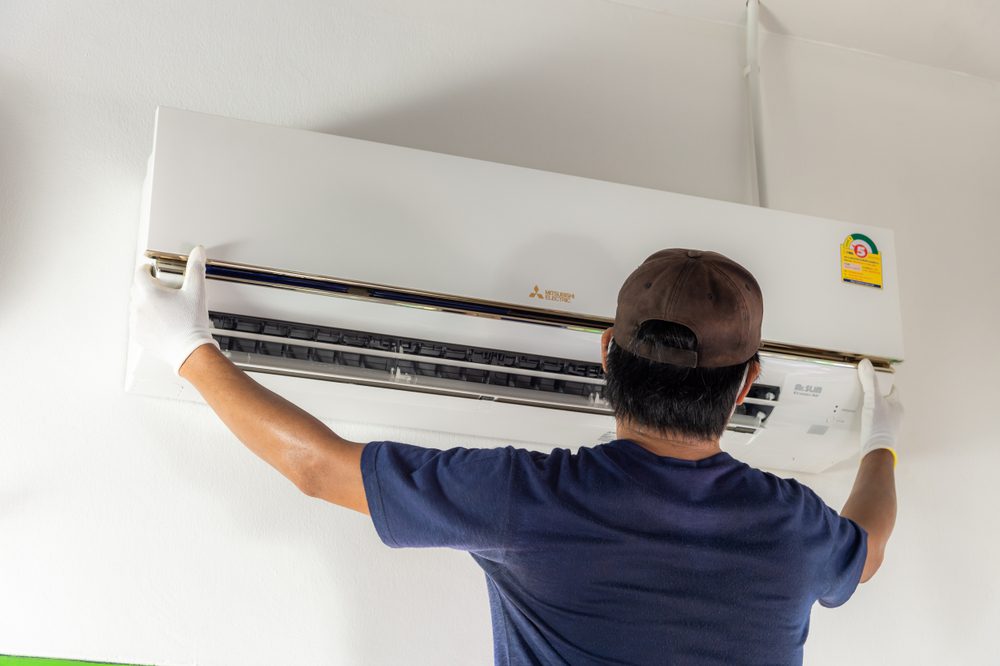
Every year around the first properly cold morning, the phone starts going. Same question, different callers: what heat pump should I actually get, and can you have it in before the weekend?
We install Mitsubishi heat pumps across Auckland more than any other brand, and it’s worth explaining why — because the reasons that matter here aren’t the ones the brochures lead with. Auckland’s winter problem isn’t extreme cold. It’s damp, mild, and relentless. That changes which specs are worth paying for.
Are Mitsubishi heat pumps any good?
Short answer: yes, and they’re one of the safer choices you can make in Auckland. Mitsubishi Electric units are quiet, hold their efficiency well at the mild temperatures Auckland actually sits at through winter, and have solid local parts and warranty support. With annual servicing, 10–15 years of reliable operation is a realistic expectation rather than a marketing claim.
The longer answer is that “Mitsubishi” covers a wide range, from entry-level high walls to ducted systems, and picking the wrong model in the range will disappoint you just as fast as picking the wrong brand.
Cold-weather performance: what actually matters in Auckland
You’ll see a lot written about Mitsubishi’s Hyper Core range holding full heating output down to around -15°C. It’s a genuine engineering achievement, and if you’re heating a place in Central Otago it’s the spec to chase.
In Auckland it’s close to irrelevant. Our overnight winter lows sit in the mid-single digits and frost is rare. Paying a premium for -15°C capability here is paying for headroom you’ll never use.
What does matter in an Auckland winter:
- Efficiency at 5–12°C. This is where your unit will spend almost all of its running hours. Check the COP at those temperatures, not the headline rating.
- Defrost behaviour in high humidity. Damp air means more frequent defrost cycles on the outdoor coil. Units that manage this gracefully keep the room warm; units that don’t leave you with cold blasts every 40 minutes.
- Dehumidification. A lot of what Aucklanders call “cold” is actually damp. Getting moisture out of the air makes a room feel warmer at a lower set temperature, which costs less to run.
Sizing matters more than any of it. An oversized unit short-cycles, dehumidifies poorly and wears out faster. We do a room-by-room calculation before quoting rather than working off floor area alone.
Quiet enough to keep your neighbours happy
Quiet operation is standard across the Mitsubishi range, and on a lot of Auckland sites this is the deciding factor rather than a nice-to-have.
Under the Auckland Unitary Plan, noise from a heat pump measured at a neighbouring residential boundary is limited to 40 dB LAeq at night. On tight suburban sections — think Mt Eden, Grey Lynn, Devonport, anywhere with a 400m² site and a neighbour three metres away — outdoor unit selection and placement are what keep you compliant. If the unit produces a tonal hum, NZS 6802 adds a penalty on top of the measured level, which tightens the margin further.
We site outdoor units with that in mind from the quote stage. It’s a lot cheaper than relocating one after a complaint.
Which Mitsubishi model suits your home?
- High wall (AP Series): the default for a bedroom, lounge or office. Good output for the money, unobtrusive, easy to service. See our high wall heat pump options.
- Black Diamond Series: the same thinking with a darker, lower-profile finish. Worth it if the unit is going somewhere visible and you’d rather it disappeared.
- Floor console: the right call for villas and bungalows with high ceilings or limited wall space, and for anyone who wants warmth at foot level. More on floor mounted units.
- Multi-split: several indoor heads on one outdoor unit. Useful when you’re heating three or four rooms and don’t want a wall of outdoor boxes. See multi-split systems.
- Ducted: whole-home heating and cooling with nothing visible but the grilles. Best specified at renovation or new-build stage. See ducted heat pumps.
Most Mitsubishi models support Wi-Fi control, which is genuinely useful for scheduling — heating an empty house is the single easiest way to waste money on a heat pump.
What Mitsubishi heat pumps cost to run
Efficiency is the reason running costs stay sensible. A well-sized, well-installed inverter heat pump delivers roughly three to five units of heat for every unit of electricity it draws, which is why it beats every form of resistive heating on cost.
The variables that move your bill are, in order of impact: correct sizing, how well the room holds heat, set temperature, and scheduling. Dropping your set point from 24°C to 20°C and running it on a timer will save you more than any brand decision.
Check the Energy Rating label and the registered performance data for the specific model you’re quoted, rather than the range as a whole — figures vary considerably between capacities.
Mitsubishi, Daikin or Panasonic?
We’re accredited across all three, so we’ve no reason to push one over another. Honestly:
- Mitsubishi Electric — strongest all-rounder for quiet operation and build quality. Our most-installed brand for Auckland homes.
- Daikin — excellent ducted and VRV systems, very strong on larger residential and light commercial work.
- Panasonic — often the best value per kW, with a good ducted range and strong quiet-mode performance.
Any of the three, correctly sized and properly installed, will outperform the “best” brand installed badly.
The installation matters more than the badge
We’ve been called out to more failed heat pumps caused by poor installation than by faulty equipment. Undersized pipework, sloppy brazing, no proper vacuum on the lines, condensate drains that run uphill, outdoor units bolted to a bedroom wall — all of it shortens the life of a good unit and none of it is the manufacturer’s fault.
Everything we quote, we install ourselves. No subcontractors, no handing the job to whoever was available. You get one team from assessment through to commissioning, and the same team back if something needs attention later. If your existing system is on its way out, we also handle heat pump replacement and servicing and repairs.
Frequently asked questions
How much does a Mitsubishi heat pump cost installed in Auckland?
Prices start from around $2,300 and run to about $5,000 supplied and installed for a single high wall unit, depending on capacity, indoor unit choice and how straightforward the pipe run is. Multi-split and ducted systems are quoted per job. Quotes are free and done on site.
How long do Mitsubishi heat pumps last?
With annual servicing, 10–15 years is a fair expectation. Filter cleaning every few months and a proper service once a year make most of the difference.
Do I need consent to install a heat pump in Auckland?
Building consent generally isn’t required for a standard residential heat pump, but the installation still has to meet Auckland Unitary Plan noise limits at the boundary. Heritage overlays and some body corporate rules can add restrictions — we check this as part of quoting.
Is Mitsubishi better than Daikin?
Neither is universally better. Mitsubishi tends to lead on quiet operation in high wall units; Daikin has an edge in larger ducted and commercial systems. The right answer depends on your rooms, not the badge.
How often should a heat pump be serviced?
Once a year for a home, more often for rental properties or units running long hours. Filters should be cleaned every one to three months — that alone protects both efficiency and air quality.
Get a quote
If your current system is struggling through this winter, or you’ve got a room that’s never quite warm, get in touch. We’ll assess the space properly, size the unit to it, and tell you honestly if a cheaper model will do the job.
Request a free quote or call 0800 224 123. We install across the Auckland region — North Shore, Central, East, West and South.

Leave A Comment