
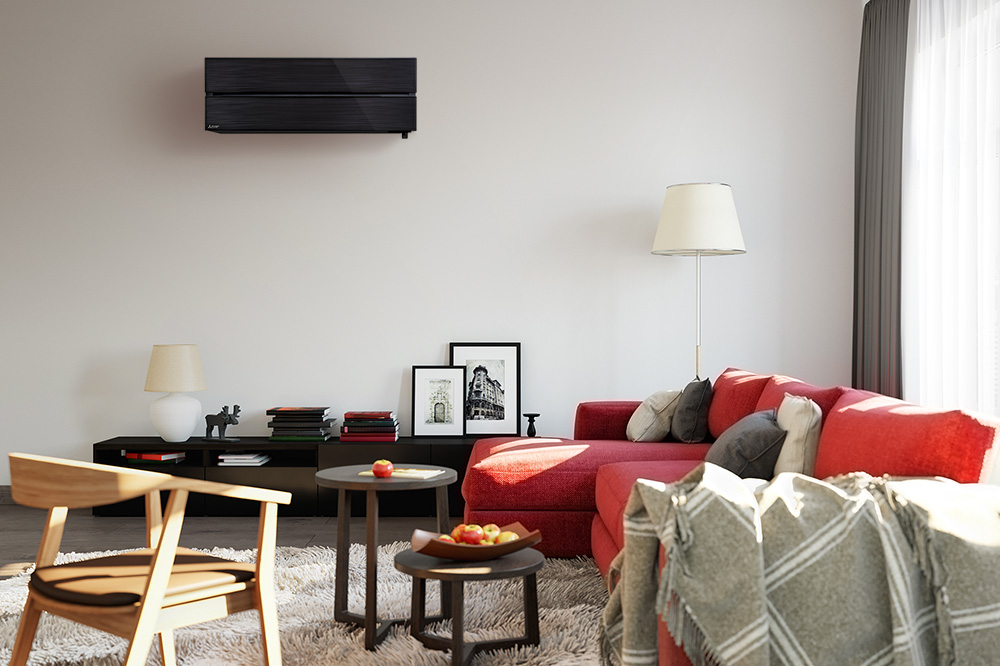
If you’re hunting for the best heat pump NZ homes can rely on this summer, you’re asking the right question at the right time. Warm afternoons are when most people finally decide they’ve had enough, and a modern system will cool the house now and heat it again when winter rolls back around.
The catch is that there’s no single best heat pump. There’s only the best heat pump for your room. Capacity, placement, ceiling height and how much sun a space gets all change the answer. Below we’ve broken down high wall, ceiling cassette and floor-mounted units so you can work out which one actually suits your home, and where it should go once you’ve chosen.
How to Choose the Best Heat Pump NZ Homes Can Rely On
Most people start by comparing brands. It’s more useful to start with the space. A 3.5kW high wall unit that’s perfect in an Auckland bedroom will struggle in a west-facing open-plan living area with a stud height of three metres, no matter whose badge is on it.
Work through these before you look at a single model:
- Room size and stud height — volume matters more than floor area, especially in newer homes with raked ceilings.
- Sun exposure — north and west-facing rooms with large windows load up with heat through the afternoon and need more cooling capacity.
- Insulation and glazing — a well-insulated, double-glazed room holds its temperature and needs less output than an older uninsulated villa.
- Airflow paths — furniture, doorways and room shape all affect whether conditioned air actually reaches the far corner.
- Noise tolerance — bedrooms and home offices benefit from a unit sized generously enough to run on low fan speed most of the time.
One thing worth knowing: EECA recommends sizing on the 7°C heating capacity, not the headline cooling figure on the box, if you’ll use the system mainly for heating. That’s the number that tells you how the unit behaves on a cold winter morning, and it’s the one most homeowners never see.
What to Think About Before Installing a Heat Pump in Summer
Summer installs have an advantage: you can feel exactly which rooms are the problem. Walk the house on a hot afternoon and note where it’s uncomfortable and when. Those rooms are your priority.
Humidity is the factor Auckland homeowners most often underestimate. Our summers are muggy rather than dry, and a correctly sized heat pump dehumidifies as it cools, which is a large part of why a room feels better. An oversized unit hits its target temperature too quickly, short-cycles, and pulls out less moisture — so bigger is not automatically better.
It’s also worth thinking a season ahead. The unit you install for January needs to carry you through July. Choosing something adaptable up front is cheaper than replacing an undersized system two winters later.
High Wall Heat Pumps: The Best All-Rounder for Most NZ Rooms
A high wall heat pump remains the most popular choice in New Zealand for good reason. Mounted near the ceiling, it pushes air across the whole room without using any floor space, and it’s the least expensive style to install in most situations.
Best for: bedrooms, standard-height living rooms, home offices, rentals meeting Healthy Homes requirements.
Key advantages:
- Strong, even airflow from an elevated position
- Fast cooling in summer and reliable heating in winter
- No impact on furniture layout
- Inverter technology keeps running costs low
- Quiet enough for bedrooms and studies
- Typically the lowest installed cost of the three styles
Placement tip: mount it on an internal wall where air can travel the length of the room, not straight into a wall two metres away. Avoid positioning it directly above a bed or the seat you use most — you want the airflow reaching you, not landing on you.
Ceiling Cassette Heat Pumps: Best for Open-Plan and High Ceilings
A ceiling cassette heat pump sits recessed in the ceiling cavity and distributes air in four directions at once. That multi-directional throw is what makes it the strongest option for large open-plan spaces where a single wall unit would leave warm corners and cold patches.
Best for: open-plan kitchen-living-dining areas, rooms with high or raked ceilings, homes where wall space is at a premium.
Key advantages:
- Four-way airflow for consistent temperatures across the whole space
- Near-invisible, low-profile finish — only the grille is visible
- Quiet operation with the compressor noise well away from the room
- Frees up every wall for windows, joinery or artwork
- Handles large volumes that a single high wall unit can’t
The catch: it needs adequate ceiling cavity depth, usually around 250–300mm depending on the model, plus safe roof access. Single-storey homes with a decent roof space are straightforward. Apartments and homes with concrete or shallow ceilings often aren’t. This is always worth checking before you fall in love with the idea.
Floor-Mounted Heat Pumps: Best for Window-Heavy and Older Homes
A floor-mounted heat pump sits low against the wall, roughly where a radiator would go. Because heat rises, low-level placement is more effective for heating — you feel warmth at foot level rather than waiting for it to work its way down.
Best for: rooms with full-height windows, villas and bungalows with limited usable wall space, raked or angled ceilings, and anyone whose priority is winter warmth.
Key advantages:
- Faster, more noticeable warmth thanks to low placement
- Works where high wall mounting isn’t possible
- Can be recessed into the wall for a flush finish
- Compact profile that sits with the furniture line
- Easy to reach for filter cleaning — no ladder required
Placement tip: keep at least a metre of clear space in front of it. A sofa pushed up against a floor unit will undo most of its advantage.
Heat Pump Comparison at a Glance
| High Wall | Ceiling Cassette | Floor Mounted | |
|---|---|---|---|
| Best room type | Bedrooms, standard lounges | Open-plan, high ceilings | Window-heavy, older homes |
| Heating strength | Very good | Very good | Excellent |
| Cooling strength | Excellent | Excellent | Very good |
| Space used | Wall only | None visible | Floor level |
| Install complexity | Low | High — needs cavity depth | Low to moderate |
| Relative cost | $ | $$$ | $$ |
Getting Placement Right Matters as Much as the Model
A well-chosen heat pump in the wrong position will underperform a modest one that’s been placed properly. A few principles hold regardless of type:
- Give the air a long run. Position the indoor unit so conditioned air travels the length of the room, not straight into an obstruction.
- Keep the outdoor unit shaded and clear. A condenser baking in full afternoon sun works harder than one in shade. It also needs clear airflow all around it — not boxed into a narrow side-of-house gap.
- Mind the neighbours. Outdoor units generate noise. Positioning matters for boundary noise limits and for staying on good terms.
- Keep pipe runs short. Long refrigerant runs between indoor and outdoor units cost efficiency. The closer the two, the better the system performs.
- Think about condensate. Drainage needs somewhere sensible to go, particularly with cassette units.
These are the calls we make on site every day, and they’re the reason a walkthrough beats a phone quote almost every time.
What About Running Costs?
Heat pumps are the most efficient form of electric heating available in New Zealand. A typical modern unit delivers around three units of heat for every unit of electricity it consumes, with Coefficient of Performance (COP) figures for current models generally sitting between three and five.
When you’re comparing models, look at the Zoned Energy Rating Label. It shows performance across hot, average and cold NZ climate zones rather than a single averaged figure, so you can see how a unit behaves in Auckland conditions specifically. Sizing correctly is the other half of the equation — an oversized unit cycling on and off will cost you more than a right-sized one running steadily.
On the upfront side, it’s worth asking your bank about their sustainable home lending. ASB, ANZ and BNZ have all offered low-interest top-up lending for heat pumps and ventilation, and terms change from time to time, so check current rates directly. We can also talk through our own payment options.
Ready to Find the Best Heat Pump for Your Home?
There’s a heat pump style to suit just about every layout. The best heat pump NZ homeowners can buy is simply the one matched to how their home actually behaves — where the sun hits, where the heat sits, and where the air needs to go. That’s what our team does every day across Auckland, from Epsom villas to North Shore new builds.
Get in touch for a free on-site quote or call us on 0800 224 123. We’ll assess the space, run the Healthy Homes calculations if you need them, and give you a clear recommendation with pricing — no obligation.
Heat Pump Selection and Placement FAQs
What is the best heat pump for a standard three-bedroom NZ home?
For most three-bedroom homes, the best heat pump NZ installers tend to recommend is a high wall unit in the main living area, plus smaller units in the bedrooms. That combination gives the best balance of comfort and cost. If the living area is open-plan with high ceilings, a ceiling cassette or a multi-split system is usually the stronger option.
What size heat pump do I need?
It depends on room volume, insulation, glazing and sun exposure rather than floor area alone. As a rough guide, a standard bedroom often suits 2.5–3.5kW and an average living room 5–7kW, but an on-site assessment is the only reliable way to size it. Oversizing costs you efficiency and comfort, not just money.
Are ceiling cassette heat pumps good for open-plan homes?
Yes. Four-way airflow distributes air far more evenly than a single wall-mounted unit, which makes ceiling cassettes well suited to open-plan living areas where a high wall unit would leave cold corners.
Will a ceiling cassette heat pump work if my ceiling cavity is shallow?
Probably not without modification. Most cassettes need roughly 250–300mm of cavity depth plus safe access. If your cavity is shallow, a high wall or floor-mounted unit is usually the better answer. We check this during the site visit.
Which heat pump is best if I have lots of windows?
A floor-mounted unit, in most cases. It works at low level where full-height glazing rules out high wall placement, and it delivers warmth where you feel it fastest in winter.
Which heat pump type cools fastest in summer?
A high wall heat pump generally cools a room quickest because its elevated position lets cool air fall and circulate across the whole space immediately.
Can I install a heat pump in summer, or should I wait?
Summer is one of the better times to install. Lead times are usually shorter than the winter rush, and you can feel straight away whether the unit is handling the rooms that were causing problems.
How long does a heat pump installation take?
A straightforward single high wall unit is typically a half-day to a full day. Ceiling cassettes and multi-room systems take longer because of the roof work and pipe runs involved.

Leave A Comment